

Topics discussed are:
- Grooming and canine care.
- Introducing your canine to health care patients.
- CAT commands and skills.
- Recognizing and mediating canine stress.
The second class deals with a variety of human issues to make CAT visits therapeutic and safe. Topics
include:
- Personality types
- Infection control, site and safety protocols
- Needs of different patient/client populations
- Effects of physical loss and grief
During the second class, guest speakers from different facilities or programs will also discuss how canine-assisted therapy can provide comfort to their clients and patients.
After completing training and passing the canine evaluation, both human and canine
are mentored by a seasoned PFH team at a facility for hands-on training and final certification.
Certified C.A.T. must wear a PFH uniform and meet all volunteer requirements of the facility where they visit, in addition to
PFH
requirements. C.A.T. teams are certified for one year and may renew their certification annually.
What Does Certification Include?
Certified Teams are insured through
PFH for
liability.
Teams may take free advanced training and continuing education classes
given several times each year.
PFH teams receive a team badge, working canine plaque and become part
of the PFH family.
Teams receive the
PFH Newsletter that is published five times a year, and a
monthly email newsletter that helps to track both the hours that teams
donate to their communities and their volunteer mileage.
A year-end tally of hours and mileage donated as a CAT team through
Paws for Healing, Inc. is sent to
volunteers to verify their volunteer time.
What is Canine-Assisted Therapy? Canine-Assisted Therapy is the incorporation of trained,
healthy canines into the treatment goals of the patient or client.
How do we know that C.A.T. really works? Medical research consistently shows that the interaction between a
person and a pet can be physically and psychologically beneficial.
Physical indicators of such beneficial interaction include:
- Lower blood pressure. slower pulse rate.
- Significantly higher survival rate from heart attacks.
- Accelerated recovery rates from illness and surgery.
Psychological indicators of such beneficial interaction include:
- Decreased depression, anxiety and isolation.
- Increased sense of well being and confidence.
- Increased socialization and interaction with others.
What does it all mean?
A dog’s unconditional love and willingness to please
translates into almost countless benefits for patients, family
members, students, and caretakers.
For Patients:
C.A.T. reduces the depression and stress of being isolated in a
hospital or care facility. When patients begin to smile and to socialize
with the dog, they have a chance to forget they are ill. It is in that
momentary sense of well being and hope that the recovery process can
begin. For those recovering from traumatic injuries and surgery,
C.A.T. dogs can play an integral part in their physical therapy. Using
commands with a dog, playing ball, or brushing its coat are all ways to
regain strength, balance, mobility, motor skills, and most importantly,
the confidence to become independent again.
For Family Members:
Therapy dogs provide a welcome respite from worry, a
physical and emotional means of comfort, and a safe outlet for grief.
Simply petting a dog helps to relieve stress and lowers one’s blood
pressure.
Families also benefit from seeing their loved ones smile or play with a
therapy dog. Those moments can provide hope, relief or a chance to share
happiness during difficult times.
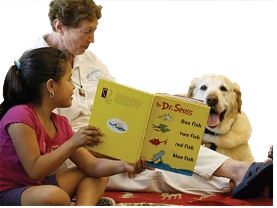
For Students and Children:
Students with challenges, be they physical, mental or
emotional, can benefit from a dog’s trusting and loving behavior because
dogs do not see disabilities or disfigurement.
Dogs treat everyone the same, no matter what the person's abilities
or disabilities are, and
thereby serve as a positive role model to students and children. Children who learn to be kind to animals have a better chance at
developing empathy, self-confidence and a sense of other people’s needs.
Students with learning disabilities can benefit from a dog’s presence in
many ways:
- They are less fearful in stressful situations (such as reading out
loud or doing arithmetic problems) because dogs are
non-judgmental.
- They are motivated to concentrate and cooperate with others if time
with the dog is used as a reward for positive behavior.
- They can enjoy positive play situations, such as playing ball,
running, taking walks or teaching new behaviors to the dog. This kind of
play helps children to develop a sense of camaraderie and self-confidence.
- They can develop nurturing skills by learning to care for the
physical and emotional needs of a therapy dog, such as brushing its
coat, feeding it, taking the canine for exercise, or reinforcing important
social skills, such as sitting, shaking hands, or lying down.
- They interact more with other students because a dog makes it easier
for people to talk to one another by providing a safe and enjoyable
topic (the dog).
For Staff and Caretakers
Therapy dogs provide relief and a safe outlet for
expressing one’s emotions. Many times our volunteers have witnessed nurses
and doctors who needed a visiting dog’s comfort after losing a patient or
during a very stressful day. Sitting with, petting or hugging a dog is a
prescription for much needed solace for these caretakers.
Seeing and regularly incorporating a therapy dog into patient care helps
to develop a strong bond between the team and staff members. C.A.T. dogs
help make the work environment seem more normal, warm and friendly. Staff
members come to depend on the teams’ regular visits for their own
emotional well being, too. Therapy dogs also motivate people to work
more cooperatively, helping to bridge relationships not only between staff
members, but between patients and caretakers, too. |